

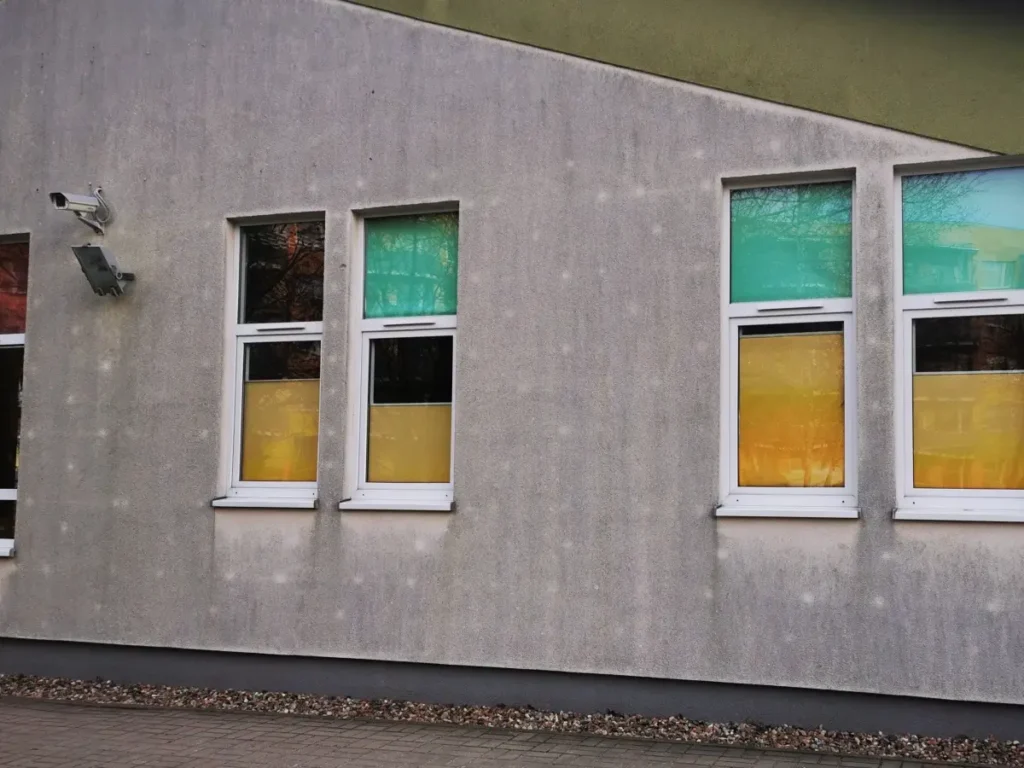
Thermal insulation of a building plays a key role in reducing energy losses and ensuring greater comfort in living or working. Therefore, ensuring a continuous layer of insulation with a minimum number of thermal bridges is of considerable importance. According to calculations by various experts, up to 10% of heat can escape through thermal bridges in a building. In addition, water vapour condensation over time negatively affects the aesthetics of the building, causing the familiar dots on the façade, known as the "ladybird effect".
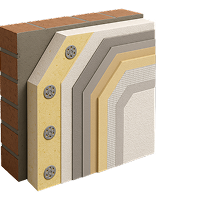
When carrying out insulation or thermal modernisation work and striving to reduce the energy consumption of our building, we must ensure that the insulation layer is even and has uniform thermal resistance. This is achieved, among other things, by using caps for mechanical fasteners, which insulate the fastening head (the so-called "pin"), ensuring a uniform and even layer of insulation on the façade. This is important because if the mechanical fasteners are embedded too deeply and the gap in the PIR board is filled with adhesive, areas with poorer thermal insulation and different degrees of moisture accumulation will form on the façade. This causes the façade to dry at different rates.
Immediately after the insulation work is completed, this is almost imperceptible, especially on warm days. At first, the dots on the façade appear only periodically during cool, humid weather, and disappear after complete drying. However, dirt and dust settle more easily in damp areas, and fungi often develop. Over time, as a result of such uneven deposition of contaminants on the surface of the walls, especially after several autumn-winter periods or in a humid climate, the stains become permanent.
To eliminate this effect, we can invest in regular cleaning or washing of the façade, which will only help for a while. To completely get rid of the problem, renovation is necessary, consisting of either adding a new layer of insulation or removing the top layer of the system, insulating the connectors with caps and reapplying the final layers of the façade. Eliminating this type of defect is troublesome and costly, as it usually requires removing the outer layer of the insulation system, i.e. paint, plaster and the base layer with mesh. Then, we need to embed the connectors deeper, apply caps and reapply the top layer of the façade.
Therefore, in order to save yourself stress and unnecessary expenses and to ensure good thermal insulation tightness, it is worth making sure that the wall insulation is done once and done well. A facade insulated in this way will serve us for many years and fully fulfil its protective and insulating function.
 4 Sienkiewicza Street, Brzeg Dolny
  +48 71 794 33 40
  ask.therm@pcc.eu