
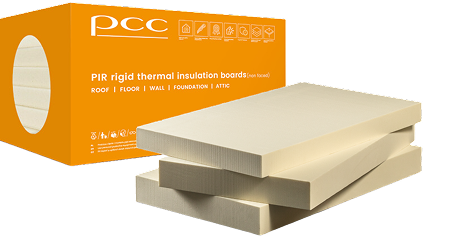

There are many thermal insulation materials on the market that differ in their physical and mechanical properties, thermal insulation parameters, durability, quality and, of course, price. How can we easily and effectively check which material will be best for our project? How can we quickly and objectively compare different thermal insulation materials?
If we want to reach our goal, we need to define that goal. To do this, it is worth answering a few questions.
First, we need to consider whether we expect our building to meet the minimum legal requirements for thermal insulation, or whether we want to achieve maximum insulation parameters by creating a passive or energy-efficient building. The higher our requirements for the thermal parameters of the partition or the entire structure, the more attention we need to pay to characteristics such as thermal conductivity, thermal resistance and the durability of the insulation material.
When choosing insulation, it is important to remember that one of the biggest enemies of thermal insulation is water. Therefore, special attention should be paid to how much our building or its structural elements will be exposed to moisture and water. It is worth paying attention to this parameter when selecting thermal insulation for the foundation, insulating a terrace or balcony, or floors in bathrooms, saunas and swimming pools. It is also worth considering a less absorbent material if our house or building is located near a water reservoir, river or sea.
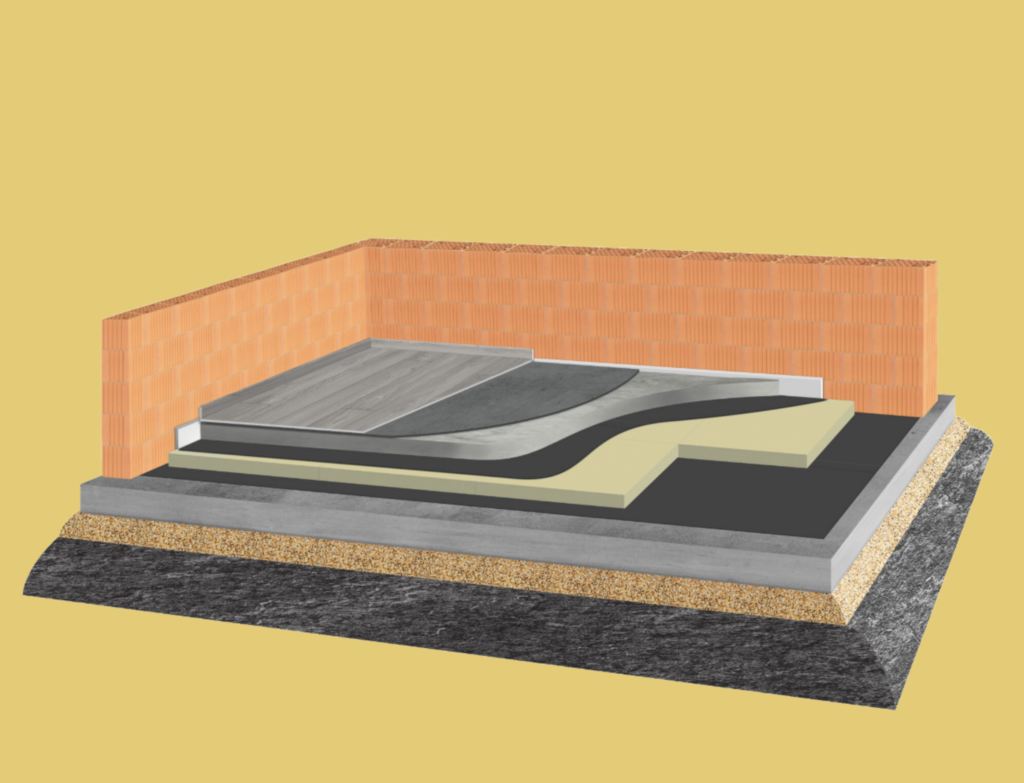
In the case of thermal insulation for floors, ceilings and foundations, a parameter such as the compressive strength of the material is of great importance.

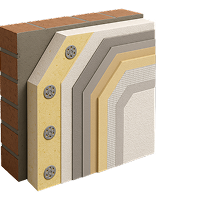
When insulating the external walls of our building, it is worth using proven and certified materials and system solutions, whereby both the material itself and its correct installation and subsequent maintenance are of great importance. Walls are usually the largest insulated surface, and poor-quality materials and errors in the installation of the insulation layer can result in high repair costs, loss of warranty or low thermal insulation efficiency. The most important parameters here are the stability of the material and its thermal insulation properties.
When talking about roof insulation, we should pay attention to its structure (flat or sloping) and whether it will be part of a usable space or not. In addition, every roof is exposed to constant moisture, air and sun, as well as significant temperature changes throughout the day. This means that the material used for its insulation must have high insulation parameters that remain unchanged in both high and low temperatures. Materials that do not drip when exposed to fire and high temperatures should be used for insulating roofs and ceilings. It is also worth choosing a lighter material to reduce the load on the walls and foundations.

A flat roof is insulated from the outside, and here, in addition to high insulation and water resistance, the high strength of the insulation material is of great importance. In the case of a pitched roof, on the other hand, the ease of installation of the insulation material and the possibility of placing it between the rafters and precisely fitting the thermal insulation to the shape of the roof are of great importance.
In some situations, when insulating the attic, it is worth choosing insulation that is less attractive to rodents, especially martens and rats.
When using thermal insulation from the inside, it is worth looking for a material that has been tested for volatile organic compound (VOC) emissions. Other interior finishing materials used in our homes should also have such tests, which will guarantee clean and healthy air inside our home.
 4 Sienkiewicza Street, Brzeg Dolny
  +48 71 794 33 40
  ask.therm@pcc.eu